
The cybersecurity industry is moving into a new operational era where the distinction between human deception, software compromise, artificial intelligence, and infrastructure attacks is disappearing almost entirely. This week’s developments across AI-powered defense systems, cross-platform supply chain attacks, credential-stealing malware campaigns, deepfake-enabled social engineering operations, and mass exploitation of open-source ecosystems reveal a digital landscape undergoing rapid transformation. The latest wave of incidents is not merely another collection of isolated security headlines. Together, they expose the emergence of a fundamentally different internet threat model — one where trust itself has become the primary target.
For years, cybersecurity teams struggled beneath what many described as the “alert firehose” problem. Modern enterprises generate staggering amounts of telemetry every minute across cloud infrastructure, SaaS applications, endpoints, developer environments, identity systems, APIs, and network layers. Security operations centers have historically been overwhelmed by excessive alerts, fragmented tooling, duplicated detections, false positives, and disconnected data streams that frequently bury meaningful threats beneath operational noise.
That problem may finally be entering a new phase as artificial intelligence becomes deeply embedded inside Network Detection and Response platforms. What was once dismissed as noisy infrastructure monitoring is rapidly evolving into something significantly more advanced. AI-assisted NDR systems are increasingly capable of correlating behavioral anomalies, identifying attack chains, contextualizing risk, prioritizing threats, and automating investigation workflows at speeds human analysts alone cannot realistically achieve.
This shift matters enormously because the scale of modern attacks has already surpassed the limits of purely manual defense operations. Organizations are no longer defending a simple network perimeter. They are defending constantly changing ecosystems involving cloud workloads, distributed endpoints, remote employees, containerized infrastructure, AI systems, CI/CD pipelines, developer workstations, third-party integrations, identity providers, and software supply chains spanning thousands of dependencies.
The security industry’s move toward agentic AI systems reflects growing recognition that defenders require automation capable of thinking contextually rather than merely triggering static alerts. The future of enterprise defense increasingly depends on systems that can understand relationships between events instead of evaluating isolated indicators alone.
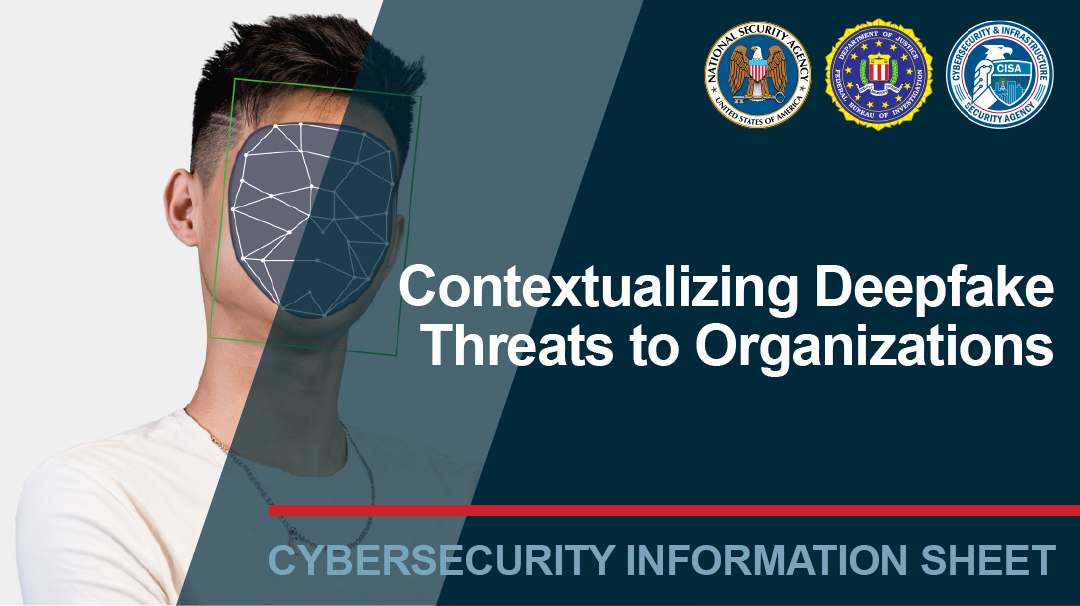
At the same time, attackers are embracing many of the same AI-driven operational advantages. The latest reporting surrounding modern social engineering attack chains reveals how dramatically deception campaigns have evolved in recent years. Traditional phishing attacks built around poorly written emails and suspicious attachments are rapidly giving way to highly orchestrated, multi-stage influence operations powered by automation, synthetic media, and real-time impersonation capabilities.
The emergence of deepfake conversations, AI-generated voice impersonation, look-alike domains, cloned communication styles, and context-aware targeting signals a dangerous escalation in social engineering sophistication. Attackers increasingly weaponize familiarity, urgency, emotional manipulation, and institutional trust with extraordinary precision. In many cases, the attack itself no longer resembles a traditional cyber intrusion at all. It resembles ordinary business communication.
This is one of the defining cybersecurity challenges of 2026. The most dangerous attacks increasingly appear legitimate.
Employees receive messages that mirror executive writing patterns. Video calls replicate trusted identities. Fake authentication portals mimic real enterprise workflows perfectly. AI-generated conversations adapt dynamically to skepticism in real time. The distinction between human manipulation and technical compromise continues collapsing into a single coordinated attack surface.
This evolution becomes even more dangerous when combined with the explosion of software supply chain attacks now targeting virtually every major open-source ecosystem simultaneously. The latest TrapDoor campaign spanning npm, PyPI, and Crates.io demonstrates how aggressively attackers continue pursuing credential theft and infrastructure compromise through trusted software repositories.
The significance of cross-ecosystem attacks cannot be overstated. Threat actors are no longer focusing narrowly on one language ecosystem or package manager at a time. They are operating across multiple developer environments simultaneously because modern software infrastructure itself has become deeply interconnected. A compromised package inside one ecosystem may eventually influence cloud services, APIs, frontend applications, backend systems, containers, CI/CD workflows, and downstream enterprise deployments across entirely different platforms.
Modern software development depends heavily on automation and speed. Organizations install packages continuously, update dependencies automatically, deploy builds at machine speed, and integrate third-party code into production environments daily. Attackers recognize that development velocity often outpaces deep security validation.
That operational reality explains why GitHub’s latest npm security enhancements represent such an important strategic move. The introduction of two-factor-authentication-gated publishing and release approval controls reflects growing urgency throughout the software industry to rebuild trust inside package ecosystems before supply chain compromise becomes even more systemic.
These new protections are not merely technical adjustments. They represent a broader industry admission that open-source trust models require stronger identity validation, stricter release governance, and more granular publication oversight moving forward. For years, many repositories prioritized accessibility and developer convenience above all else. Attackers increasingly weaponized that openness.
The challenge now facing repository maintainers is balancing security enforcement with the collaborative flexibility that made open-source ecosystems so powerful in the first place. Every additional safeguard introduces friction. Yet failing to strengthen trust validation creates even larger systemic risks.
The latest Packagist compromise further reinforces how vulnerable these ecosystems remain. Malicious packages retrieving Linux malware directly from GitHub-hosted infrastructure demonstrate how attackers increasingly leverage legitimate cloud platforms and trusted delivery mechanisms to conceal malicious operations. Criminal campaigns no longer rely exclusively on suspicious infrastructure or obvious malware distribution domains. They abuse mainstream developer ecosystems, cloud storage providers, release hosting systems, and automation pipelines that organizations already trust operationally.
This trend fundamentally changes how defenders must think about software integrity. Security teams can no longer assume that trusted repositories inherently contain trustworthy content. Continuous validation, dependency auditing, behavioral analysis, provenance verification, and runtime monitoring are becoming essential operational requirements rather than optional enhancements.
The latest Laravel-Lang compromise targeting PHP environments highlights the growing breadth of these supply chain campaigns. Credential-stealing frameworks embedded inside widely trusted package ecosystems demonstrate how attackers increasingly prioritize long-term credential harvesting operations over immediate disruptive attacks. Access itself has become one of the cybercrime economy’s most valuable commodities.
This obsession with credential theft extends far beyond software development environments alone. North Korea-linked Lazarus Group’s deployment of the RemotePE memory-only remote access trojan against financial and cryptocurrency organizations underscores how advanced threat actors continue refining stealth-oriented intrusion strategies focused on persistence and financial targeting.
Memory-only malware remains especially dangerous because it minimizes traditional forensic artifacts and avoids many disk-based detection mechanisms. Threat actors increasingly prioritize in-memory execution, reflective loading, ephemeral persistence techniques, and modular payload delivery precisely because defenders continue relying heavily on conventional endpoint signatures and file-based analysis workflows.
Financial institutions and cryptocurrency platforms remain especially attractive targets because they combine direct monetary value with complex international transaction environments and high-speed digital asset movement capabilities. Nation-state groups increasingly blur the line between geopolitical cyber operations and financially motivated attacks, particularly when sanctioned governments seek alternative revenue generation mechanisms.
Meanwhile, the FIFA World Cup 2026-themed scam ecosystem demonstrates how quickly cybercriminals capitalize on major global events to launch fraud campaigns at enormous scale. Thousands of football-themed domains and scam operations appearing months ahead of the tournament reveal how attackers systematically exploit global attention cycles, emotional engagement, and consumer excitement to distribute malware, conduct phishing operations, harvest credentials, and execute financial fraud.
Large-scale cultural events have become predictable attack opportunities because they naturally generate urgency, ticket demand, emotional investment, and increased online activity. Cybercriminal organizations increasingly operate like sophisticated marketing operations, rapidly adapting campaigns around trending events, breaking news, entertainment launches, sporting events, and geopolitical developments.
At the same time, AI itself is rapidly becoming one of the most powerful cybersecurity tools ever deployed. Anthropic’s disclosure surrounding Project Glasswing and the discovery of more than 10,000 high-severity vulnerabilities across critical software ecosystems signals a dramatic shift in vulnerability research capabilities.
Artificial intelligence is now accelerating software analysis, flaw discovery, code auditing, exploit simulation, and infrastructure mapping at unprecedented scale. This creates both enormous defensive potential and serious long-term concerns. AI-assisted vulnerability discovery could dramatically improve defensive patching efforts and software resilience, but it may also compress vulnerability exploitation timelines even further as offensive actors adopt similar capabilities.
The cybersecurity industry is entering an era where AI may simultaneously strengthen defenders and empower attackers at extraordinary speed. Organizations that fail to modernize operational security models around this reality risk falling dangerously behind.
This broader collapse of digital trust is also reflected in the latest GitHub-based Megalodon campaign, where thousands of repositories reportedly received malicious commits within only a few hours. The scale and automation involved in such attacks reveal how modern cyber operations increasingly resemble industrialized systems rather than isolated hacking attempts.
Threat actors now operate with automation frameworks capable of mass repository targeting, large-scale credential harvesting, infrastructure scanning, package poisoning, CI/CD abuse, and coordinated exploitation campaigns at internet scale. The economics of cybercrime increasingly reward automation, persistence, stealth, and scalability over noisy destructive attacks alone.
Meanwhile, actively exploited vulnerabilities affecting LiteSpeed cPanel plugins and Drupal Core environments reinforce how quickly attackers operationalize newly disclosed flaws once public exposure occurs. Infrastructure management systems, hosting environments, content management platforms, and administrative tooling remain extraordinarily valuable because they often sit at the center of customer ecosystems and operational workflows.
The dismantling of a criminal VPN infrastructure used by dozens of ransomware groups also highlights another major trend reshaping cybercrime itself. Criminal operations increasingly rely on shared infrastructure ecosystems supporting malware delivery, anonymization, credential operations, scanning activity, and ransomware deployment. Cybercrime today frequently resembles interconnected business networks rather than isolated gangs operating independently.
This interconnectedness makes modern threat ecosystems remarkably resilient. Taking down one operation rarely eliminates broader risk because infrastructure, tooling, access brokers, malware frameworks, and monetization channels frequently overlap across multiple groups simultaneously.
Collectively, this week’s cybersecurity headlines expose an internet economy where trust boundaries are eroding across every layer simultaneously. Developer ecosystems, AI systems, software repositories, communications platforms, authentication workflows, cloud infrastructure, and human interactions themselves are all becoming active battlegrounds.
The organizations that adapt successfully in this environment will not necessarily be the ones with the loudest security marketing or largest compliance checklists. They will be the ones capable of understanding that cybersecurity in 2026 is no longer simply about blocking malware or patching servers. It is about continuously validating trust inside systems where attackers increasingly disguise malicious activity as ordinary operations.
That is the defining cybersecurity story emerging right now across the global digital economy.